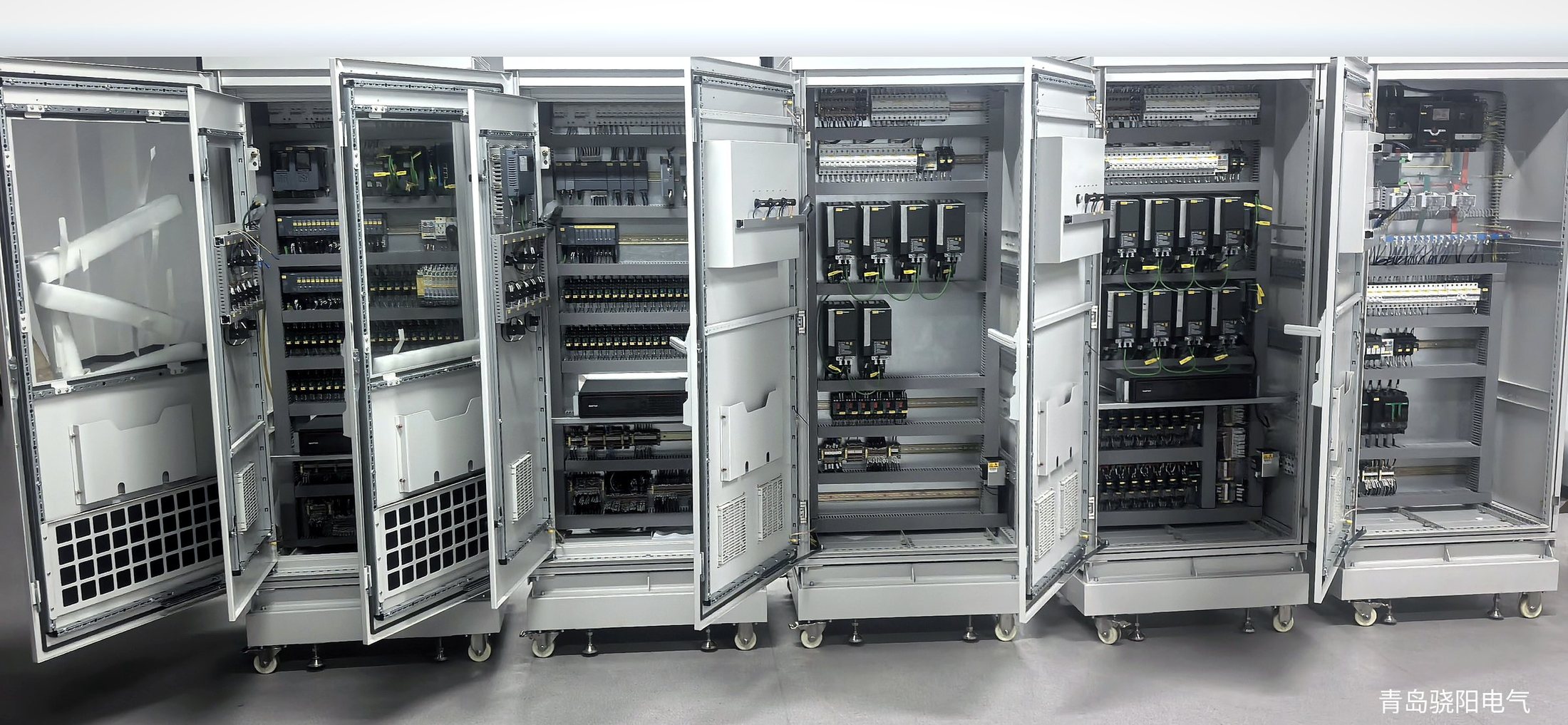
Photo: assemblies before delivery – six enclosures under pre-delivery power check, matched to enclosure and circuit numbers.
A fair share of distribution panel failures are not caused by the equipment itself but by the order of operations: opening an enclosure without isolating, reaching in without proving dead, and treating lockout/tagout as paperwork. The rules below follow GB/T 7251.1-2023 (identical to IEC 61439-1:2020) and GB/T 33579-2017 for lockout/tagout, and are written to be printed and kept next to the enclosure.
1. Know the limits of the enclosure first
Low-voltage assemblies supplied by Qingdao Xiaoyang Electric – indoor distribution boxes, outdoor waterproof enclosures, PLC control cabinets and data-centre distribution cabinets – are designed and built to GB/T 7251.1-2023. Ingress protection is not fixed once the model is chosen: the enclosure, gaskets and cable entries maintain it together. Doors left open, missing gaskets and unsealed entries all reduce actual protection below the nameplate value.
| IP rating | Environment | Precaution |
|---|---|---|
| IP30 | Indoor dry area, no dripping water or conductive dust | Not for damp, dusty or water-splash areas |
| IP54 | Indoor damp areas or light splashing | Gaskets must be intact; close doors after work |
| IP65 | Outdoor, dust-tight and protected against water jets | Do not open in rain or snow |
2. Five checks before you touch anything
- Enclosure number and circuit reference match the drawings and the work permit; confirm what the circuit feeds.
- The load is stopped or transferred to a standby circuit. For fire, security or medical loads, obtain written approval first.
- Affected users are notified, a “work in progress” tag is hung at the point of operation, and an observer stays present.
- No smell, smoke marks, bulges or burnt parts, no water or condensation; the door bonding conductor is intact.
- Access is clear, the floor is dry with an insulating mat, and normal and emergency lighting work.
3. Isolation: five steps, none may be skipped
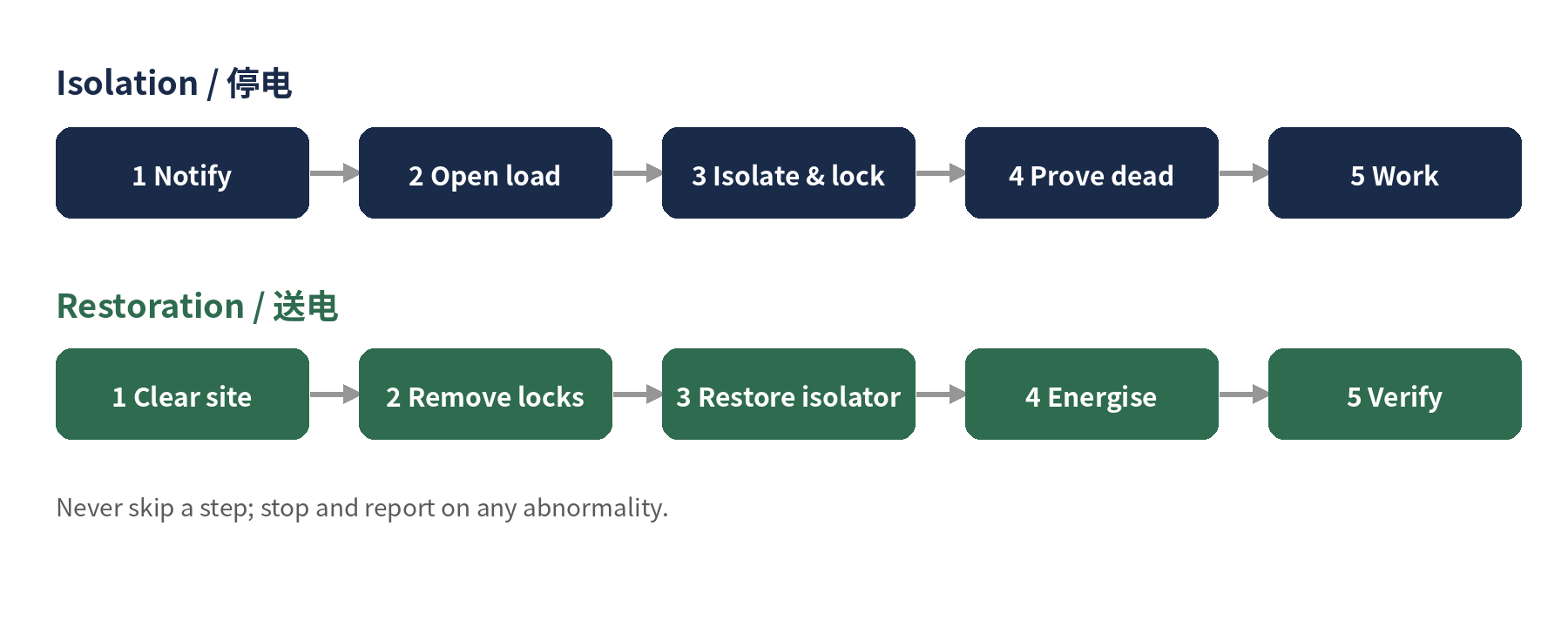
Notify and confirm, open the load, isolate and lock, prove dead, then work.
Isolate the load side first and the source side second; restore in the reverse order. After isolating capacitor banks, wait for the discharge time stated in the manual (typically at least one minute) before testing. Test every phase: prove the detector on a known live point, test the work area phase by phase, then re-prove the detector. Only then may work begin. Lockout/tagout is one lock and one tag per person, with the key kept by the person working – never shared, never held by someone else.
4. Restoration: five steps back
Clear the site and count tools, remove temporary earthing and locks, restore the isolator, energise, then verify readings.
Before closing the breaker, confirm that tools and materials are out, temporary earthing is disconnected, all personnel have left, no foreign objects remain, doors and covers are back in place, and nobody is working downstream. Stay on site for at least ten minutes after energising: check voltage, current, indicators and meters, listen for abnormal noise, smell for overheating, and record the time and readings.
5. Eight things never to do
| Prohibited | Consequence |
|---|---|
| Working on live parts without isolation and testing | Electric shock and arc burns, possibly fatal |
| Operating with wet hands or standing on wet ground | Body resistance drops; even small leakage becomes lethal |
| Bypassing fuses or protection circuits with wire | Protection fails; short circuits may ignite cables |
| Up-rating breakers without recalculating the circuit | Cable and terminal overheating, fire risk |
| Plugging modules or tightening terminals live | Arc flash burns to hands and face |
| Storing objects on top of the enclosure or blocking vents | Internal temperature rise, faster insulation ageing |
| Using water or foam on an electrical fire | Shock risk and total equipment loss |
| Unauthorised rewiring, extra sockets or added loads | Breaches assembly integrity and voids warranty |
6. What to do when something is wrong
| Symptom | Likely cause | Action |
|---|---|---|
| Smell or smoke | Overheated insulation, loose contact | Isolate upstream, do not open the enclosure, evacuate and report |
| Humming or crackling | Loose core or arcing contact | Isolate, then check terminals and torque; never run with the fault |
| Frequent tripping | Overload, earth leakage, short circuit | Record trips and load; investigate before resetting; never force reclosing |
| Water or condensation inside | Aged gasket, unsealed entries | Isolate, dry out, renew seals and re-test insulation |
| Enclosure feels live | Poor earthing or damaged insulation | Stop use, test, check earthing continuity and insulation |
7. Maintenance intervals
| Interval | Item | Acceptance |
|---|---|---|
| Daily | Appearance, indicators, smell and noise, door status | No abnormality, doors closed |
| Monthly | Gaskets and vents cleaned, terminal torque sampled, RCD test | Seals intact, nothing loose, RCD trips |
| Quarterly | Infrared scan of busbars and terminals; insulation resistance after isolation | Temperature difference and insulation within limits |
| Annually | Full torque check, insulation and earthing tests, protection settings | Records kept; retest after correction |
Shorten the intervals in dusty, salt-fog or high-temperature sites. For outdoor enclosures, a seal and condensation check before and after the rainy season costs far less than a repair afterwards.
8. First aid and electrical fire
First aid: switch off the supply, or use dry insulating material to separate the victim – never touch the person directly. Call for help and dial 120. If breathing or pulse has stopped, start CPR at once and continue until professionals arrive.
Electrical fire: isolate first, then use CO2 or dry-powder extinguishers. Never use water or foam. If the fire cannot be controlled, evacuate and dial 119. For arc burns, cool with clean water, do not pull off stuck clothing, and seek medical care promptly.
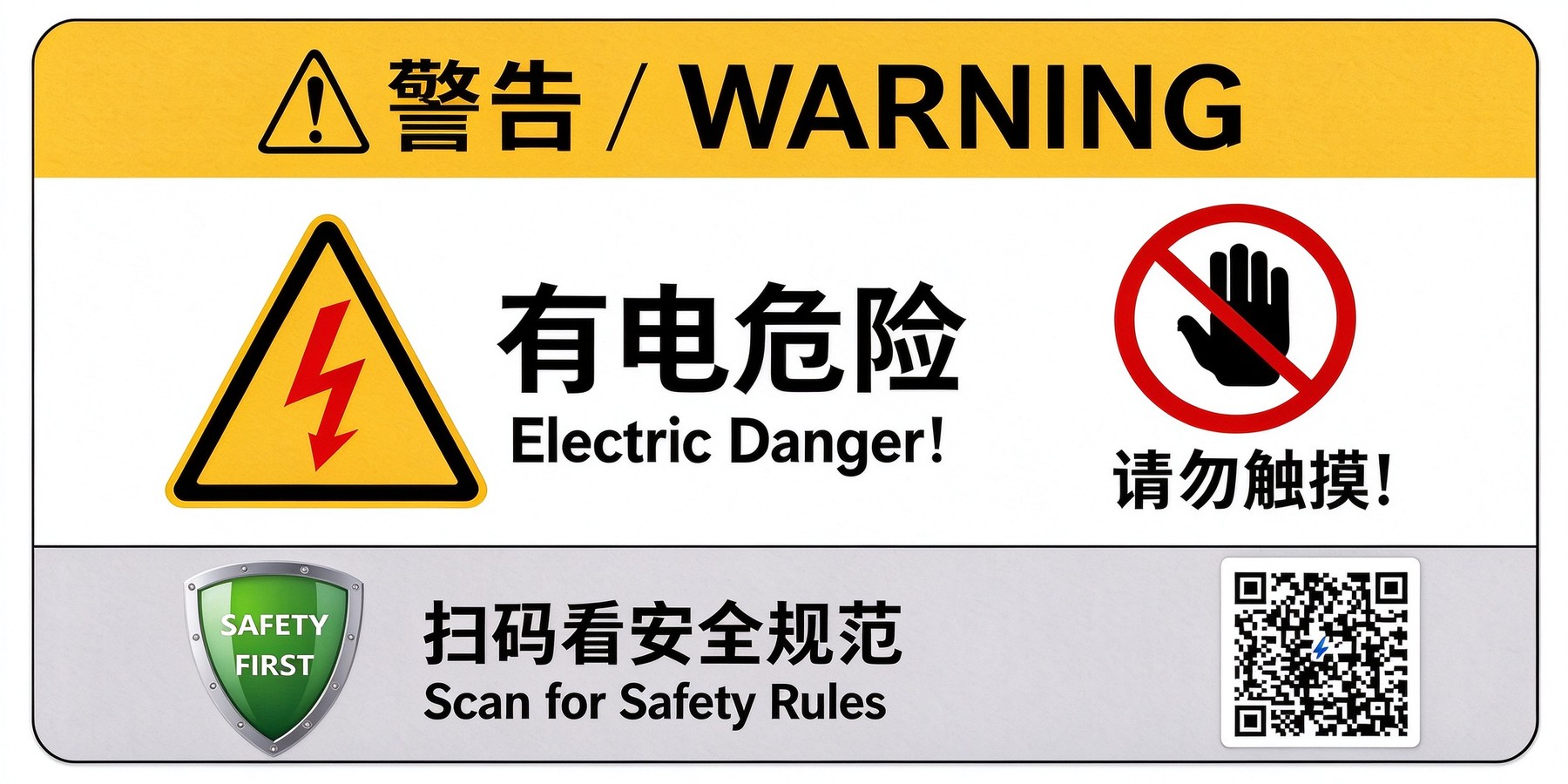
Photo: bilingual warning label shipped on the enclosure door; the QR code opens this safety guide.
The full version of this procedure is laid out on both sides of an A4 sheet, supplied with the equipment and intended to be kept beside the enclosure. Engineering and maintenance teams can request the electronic copy through our website; selection, wiring and spare-part documents are available at qdxiaoyang.com.